
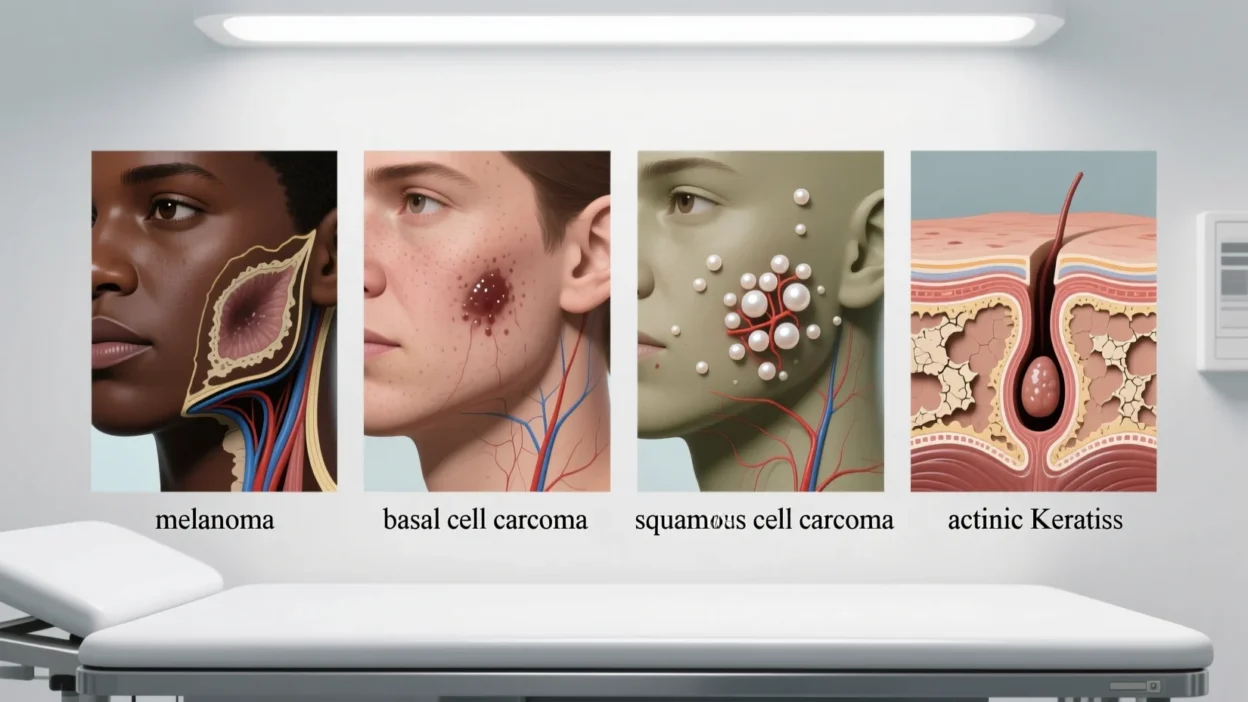
I still remember the day I noticed a strange spot on my skin. At first, I thought it was just a normal mole or maybe a small rash from the heat.
But over time, I saw that it started changing color and becoming darker around the edges. I ignored it for weeks because I never imagined it could be something serious like skin cancer.
One morning, while looking in the mirror, I realized the spot looked completely different than before, and fear instantly hit me. I started searching about what skin cancer looks like and learned that unusual moles, rough patches, or bleeding spots can sometimes be warning signs. That moment changed the way I looked at my health.
I decided to visit a doctor, and thankfully, I caught the problem early. If you have ever noticed a strange change on your skin, I want you to know that paying attention early can truly make a huge difference.
What Does Skin Cancer Look Like
Skin cancer does not always look the same. It can appear as a new growth, a sore that does not heal, or a change in an existing mole. The most common signs include
- A spot that changes color or size
- A wound that bleeds and never fully heals
- A scaly patch that feels rough
- A shiny bump that looks like a pearl
- A mole with uneven edges
Some skin cancers are flat and others are raised. Some itch, others bleed or become painful. The key sign is change over time.
Types of Skin Cancer and How They Appear
There are three major types of skin cancer. Each has a different appearance.
Melanoma
Melanoma is the most dangerous form. It often develops from an existing mole.
What melanoma usually looks like
- Black or dark brown mole with multiple colors
- Irregular edges that look blurry
- Asymmetrical shape
- Rapid growth in size
- Bleeding or itching
Basal Cell Carcinoma
This is the most common type and usually slow growing.
Typical appearance
- Shiny bump that looks pearly or translucent
- Pink or red patch that is scaly
- Open sore that heals then returns
Squamous Cell Carcinoma
This type can spread if untreated.
What it looks like
- Rough red patch
- Wart like growth
- Firm bump with crusted surface
ABCDE Rule for Identifying Skin Cancer
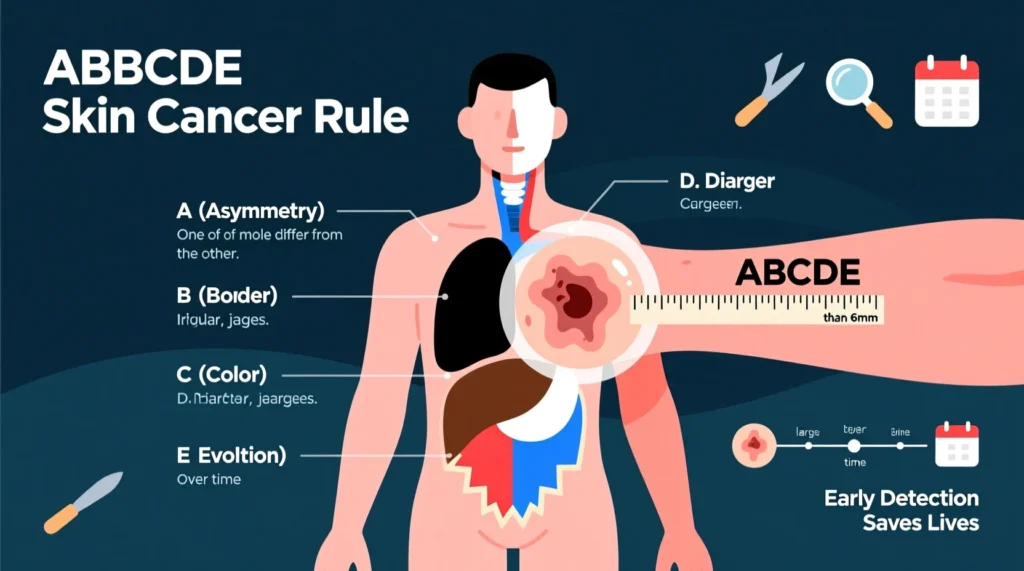
Doctors use the ABCDE rule to identify suspicious moles.
| Letter | Meaning | Description |
|---|---|---|
| A | Asymmetry | One half does not match the other |
| B | Border | Edges are uneven or blurred |
| C | Color | More than one shade present |
| D | Diameter | Larger than a pencil eraser |
| E | Evolving | Changes in shape size or color |
Where Skin Cancer Commonly Appears
Skin cancer usually appears on sun exposed areas such as
- Face
- Neck
- Hands
- Arms
- Back
- Legs
However it can appear anywhere including under nails, scalp, and soles of feet.
Early Signs Most People Ignore
Many people miss early skin cancer because they think it is harmless.
Early signs include
- A small pimple that never heals
- Itchy mole that keeps changing
- Red patch that looks like eczema
- A sore that bleeds without injury
If something on your skin does not heal within three weeks it should be checked.
Does Skin Cancer Hurt
Most skin cancers do not hurt in the beginning. Pain usually comes in later stages. This is why many people ignore early signs.
Real Life Descriptions From Patients
Patients often describe skin cancer as
- Something that felt like a normal mole but changed suddenly
- A sore that kept reopening
- A bump that slowly grew for months
These stories show how silent skin cancer can be.
How to Check Your Skin at Home
You should perform a full skin check once a month.
Steps
- Stand in front of a mirror
- Check face neck and ears
- Examine arms hands and nails
- Check chest back and legs
- Use a hand mirror for hidden areas
Look for anything new or changing.
When to See a Doctor
Visit a dermatologist if you notice
- A mole changing shape or color
- Bleeding without injury
- A sore lasting longer than three weeks
- Rapid growth of any spot
FAQs
What does skin cancer look like in early stages
It looks like a changing mole a scaly patch or a small sore that does not heal.
Can skin cancer be mistaken for a pimple
Yes especially basal cell carcinoma often looks like a pimple that never heals.
Does skin cancer always bleed
No bleeding usually occurs later.
Is skin cancer itchy
It can itch but not always.
Can skin cancer appear suddenly
Yes some forms grow quickly.
Conclusion
Skin cancer can appear in many different forms, including unusual moles, dark spots, red patches, shiny bumps, sores that do not heal, or changes in the size, shape, or color of existing skin marks.
Because the symptoms can look harmless at first, many people ignore the early warning signs. Paying close attention to changes in your skin is one of the best ways to detect skin cancer early.
The most common types include basal cell carcinoma, squamous cell carcinoma, and melanoma, with melanoma being the most dangerous if left untreated. Early diagnosis and medical treatment can greatly improve recovery chances and prevent the cancer from spreading.
If you notice any suspicious skin changes, persistent itching, bleeding, or rapidly growing spots, it is important to consult a healthcare professional as soon as possible.
Protecting your skin from excessive sun exposure, using sunscreen, and having regular skin checks can help reduce the risk of developing skin cancer and support long-term skin health.

“Explore the life, works, and timeless novels of Jane Austen, the beloved English novelist.”